Plot No. 347, Street No. 15, Block 3, B.Y.J.C.H.S., Bahadurabad, Karachi-75400, Pakistan

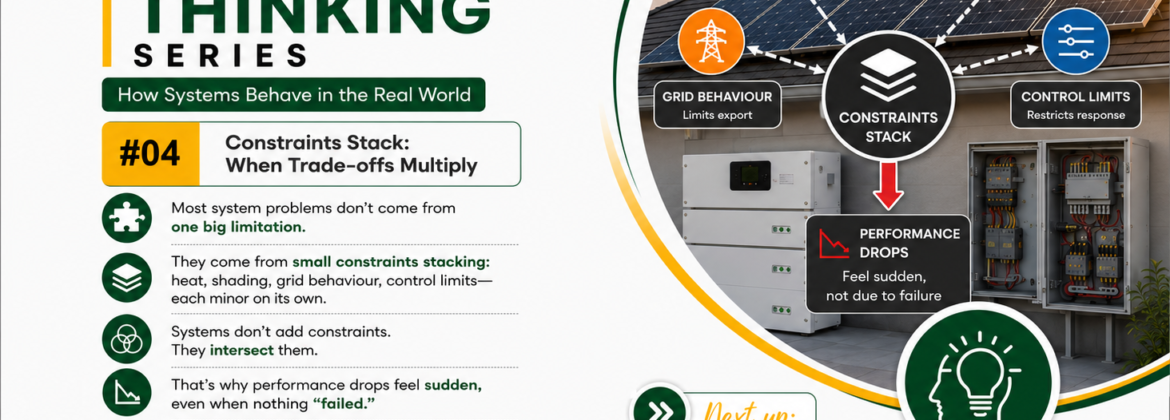
In Isolation, Most System Constraints Appear Manageable. ⚡ A little thermal derating here. ⚡ A small voltage mismatch there. ⚡ A modest export limit. ⚡ A brief grid fluctuation. Each one, examined alone, seems unlikely to matter much. The problem is not individual constraints. The problem is how they stack. Real systems rarely operate with […]
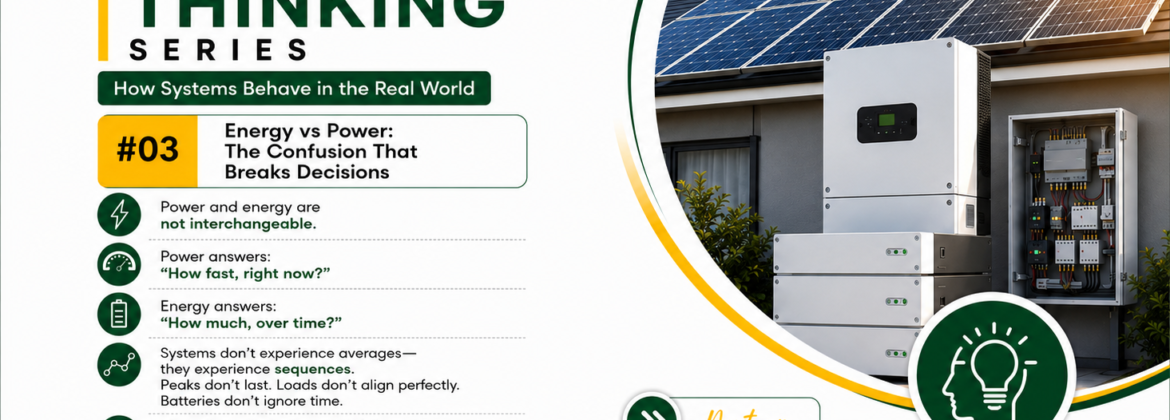
Few misunderstandings cause more persistent design errors, misaligned expectations, and post-installation frustration than the quiet conflation of power and energy. The terms are familiar. The units are known. And yet, in practice, they are routinely substituted for one another—sometimes unconsciously, sometimes deliberately. Power answers a momentary question: Power: How fast is energy being delivered right […]

One of the most persistent sources of disappointment in solar and energy storage systems is not poor design or faulty equipment but misinterpreted ratings. Rated power, rated capacity, and nameplate values are often treated as promises. In reality, they are reference points—valid only under a narrow set of conditions that rarely persist in the field. […]

One of the most persistent misconceptions in solar and energy storage is subtle and, therefore, dangerous: if the right components are selected, the system should behave correctly. This assumption feels reasonable. After all, engineering begins with components—modules, inverters, batteries, cables, and protection devices. Specifications are reviewed, capacities matched, and safety margins added. On paper, the […]
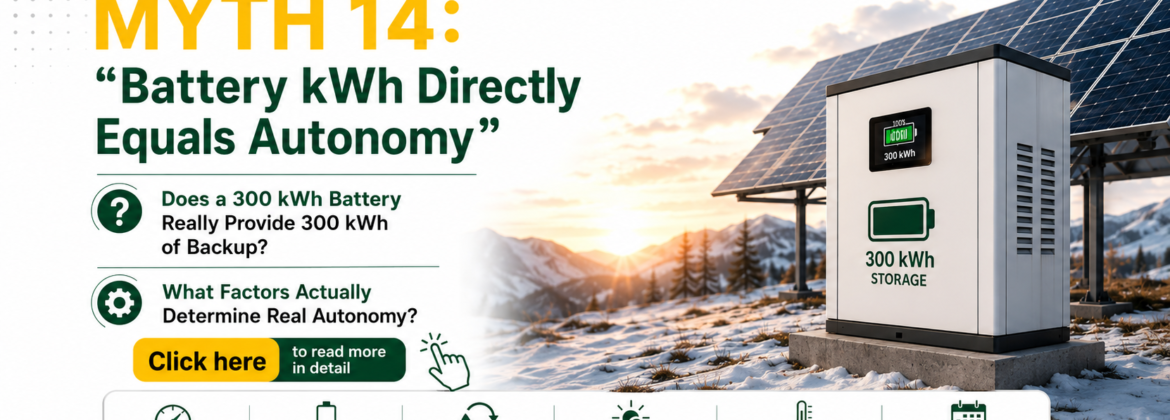
The Myth “Assume 5% soiling loss. That’s standard.” This single number is frequently used in proposals, simulations, and performance discussions across Pakistan. Why This Sounds Reasonable The assumption appears sensible for several reasons: ⚡ A single percentage simplifies calculations. ⚡ Many software tools require a default input. ⚡ Cleaning schedules are often informal or irregular. […]
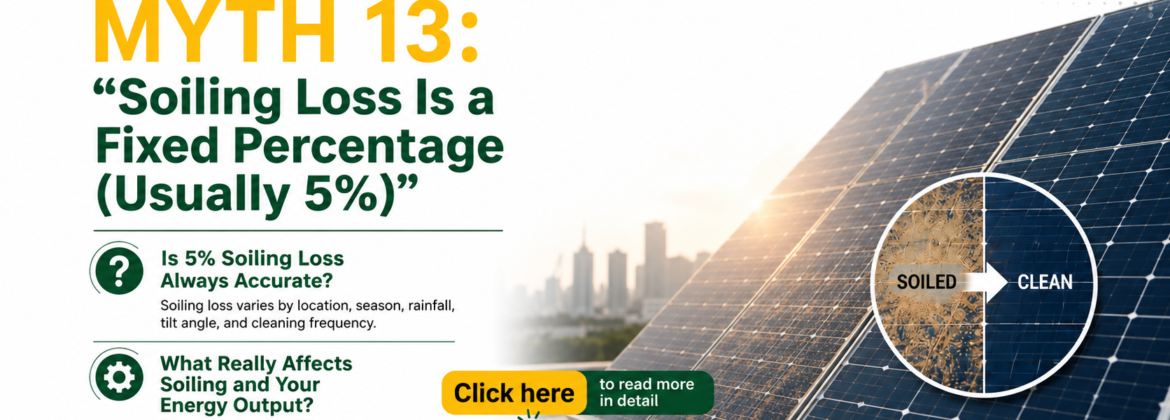
The Myth “Assume 5% soiling loss. That’s standard.” This single number is frequently used in proposals, simulations, and performance discussions across Pakistan. Why This Sounds Reasonable The assumption appears sensible for several reasons: ⚡ A single percentage simplifies calculations. ⚡ Many software tools require a default input. ⚡ Cleaning schedules are often informal or irregular. […]

The Myth “This is a Tier-1 panel, so it must be the best quality.” “We only use Tier-1 equipment.” The term Tier-1 is now used for panels, inverters, batteries, and even accessories — often as a shortcut for “high quality.” Why This Sounds Convincing The claim appears believable for several reasons: ⚡ The term sounds […]

Pakistan’s solar story is often told as a simple one. Electricity became expensive, supply remained unreliable, solar equipment got cheaper, and consumers responded rationally. Homes, businesses, farms and institutions moved toward solar because the economics made sense. That part is true. But it is no longer the whole story. The more important question now is […]

Abis Husein The current situation in Pakistan’s power sector appears volatile. The real challenge now is how to turn this transition into a practical, well-structured plan. The question is no longer about whether individual policies are justified. In isolation, measures like tariff adjustments or regulatory changes may make sense. The real concern is whether they […]
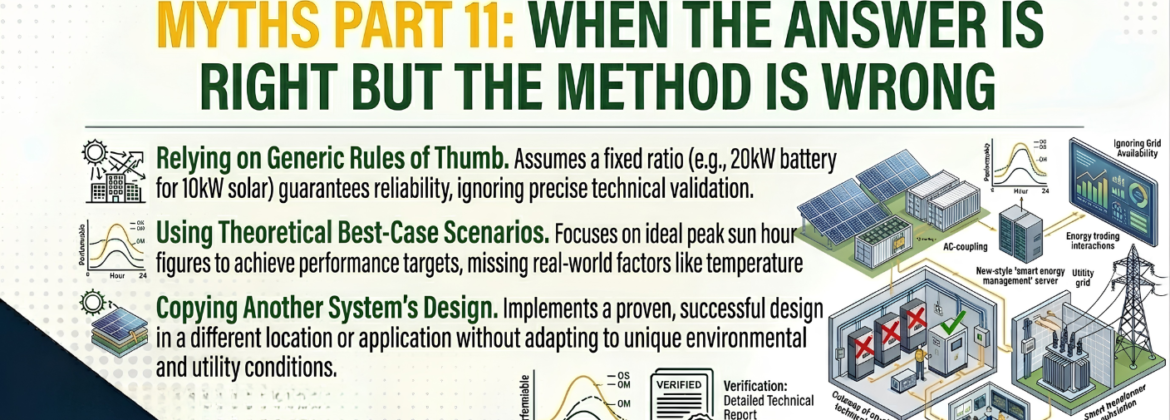
The Flaw in the Spreadsheet: A Closer Look at Common ESS Sizing Math In solar-plus-storage system design, it is not uncommon to see calculations that arrive at a perfectly sensible-looking system size, yet rest on deeply misleading assumptions. This is particularly true for Energy Storage System (ESS) sizing, where quick spreadsheets and automated “design calculators” […]


