Plot No. 347, Street No. 15, Block 3, B.Y.J.C.H.S., Bahadurabad, Karachi-75400, Pakistan

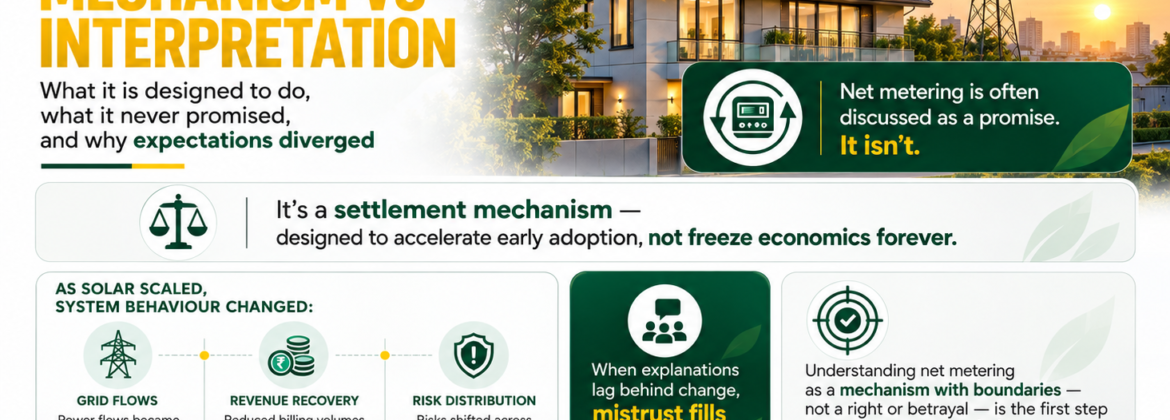
What it is designed to do, what it never promised, and why expectations diverged Why Net Metering Became a Flashpoint Net metering sits at the intersection of: ⚡ household economics, ⚡ grid behaviour, ⚡ revenue recovery, ⚡ and public trust. As a result, it attracts more emotion than most technical mechanisms. Much of the disagreement […]
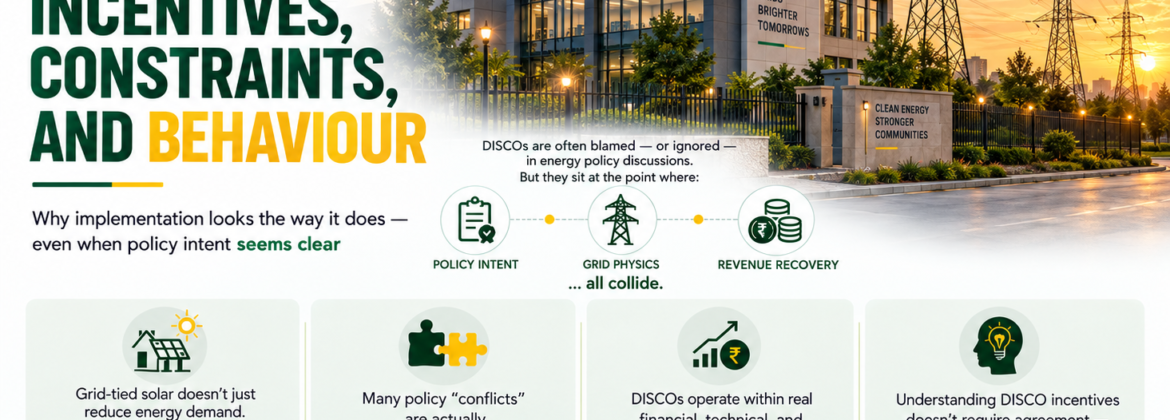
Why implementation looks the way it does — even when policy intent seems clear Why DISCOs Sit at the Center of Most Confusion In Pakistan’s energy discussions, DISCOs are often treated as: ⚡ Passive implementers of policy, or ⚡ Active obstacles to progress Neither view is accurate. DISCOs sit at the intersection of policy, engineering, […]
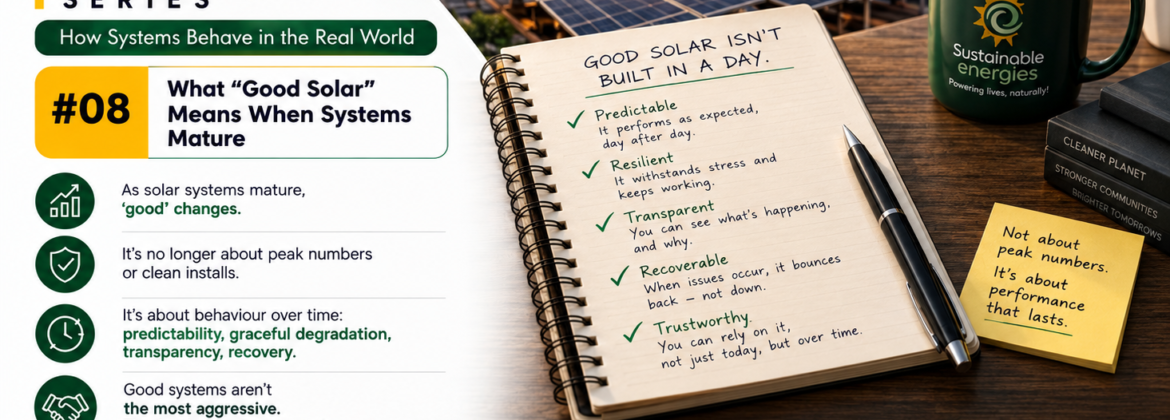
As solar and energy storage systems mature, the definition of “good” quietly changes. In early adoption phases, success is easy to describe: installation completed, equipment commissioned, expected numbers roughly met. Performance is judged against optimistic baselines, and deviations are tolerated as learning curves. But as systems scale, integrate, and persist over years, those criteria stop […]
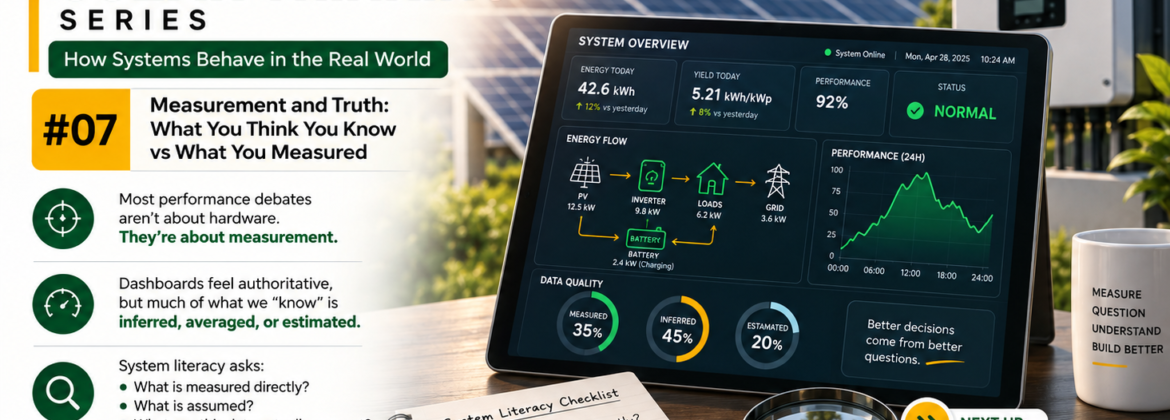
Measurement and Truth: What You Think You Know vs What YouMeasured In solar and energy storage systems, disagreements about performance rarely begin with hardware. They begin with measurement. What is known about a system is shaped not only by what is happening, but by what is being observed, how it is being sampled, and how […]
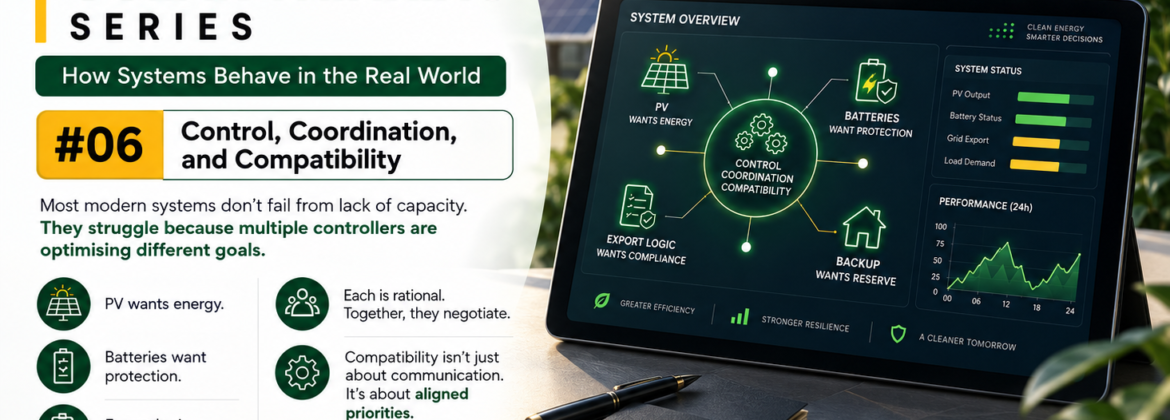
Modern solar and energy storage systems rarely fail because of insufficient hardware. More often, they struggle because multiple controllers are attempting to optimise different objectives at the same time. Each subsystem—PV inverter, battery inverter, energy management logic, grid interface, backup controller—behaves rationally in isolation. Problems emerge when these rational behaviours are poorly coordinated. Control is […]

The power sector in Pakistan has been experiencing unexpected doubts recently. There have been a series of policy announcements that have followed closely, such as the replacement of net metering by net billing, the adoption of fixed charges depending on authorized load, continuing tariff restructuring debates, and the growth of digital infrastructures such as artificial […]

ABIS HUSEIN Pakistan’s solar debate often gets reduced to immediate questions: what rate will exported units get? Will net billing hurt payback? And, are solar users shifting costs onto others? These questions matter. But once distributed solar reaches meaningful scale, the deeper issue is no longer just pricing. It is integration. Pakistan’s first solar phase […]
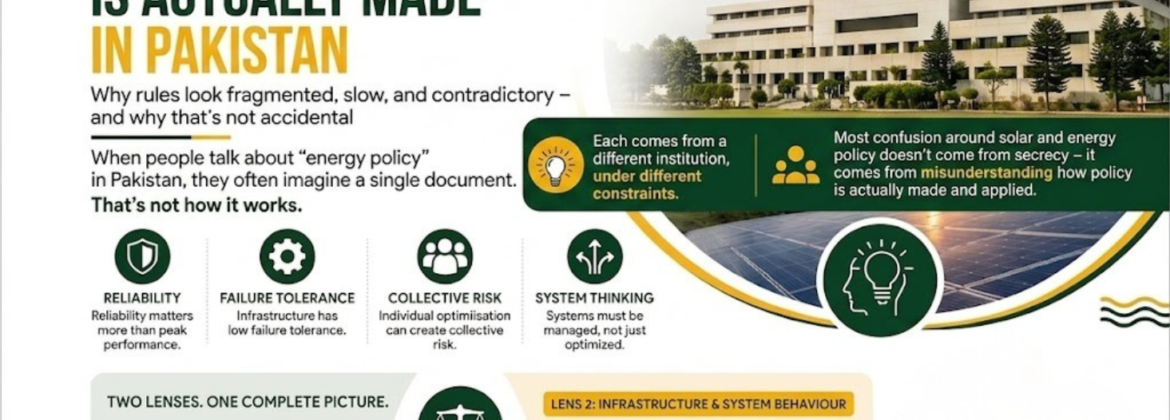
Why Energy Policy Often Feels Confusing Many discussions around energy policy in Pakistan start from an assumption that policies are clear, singular, centrally designed, and consistently implemented. In reality, none of those assumptions hold. Energy policy does not exist as one document, written once and applied cleanly. It exists as a layered system of decisions, […]
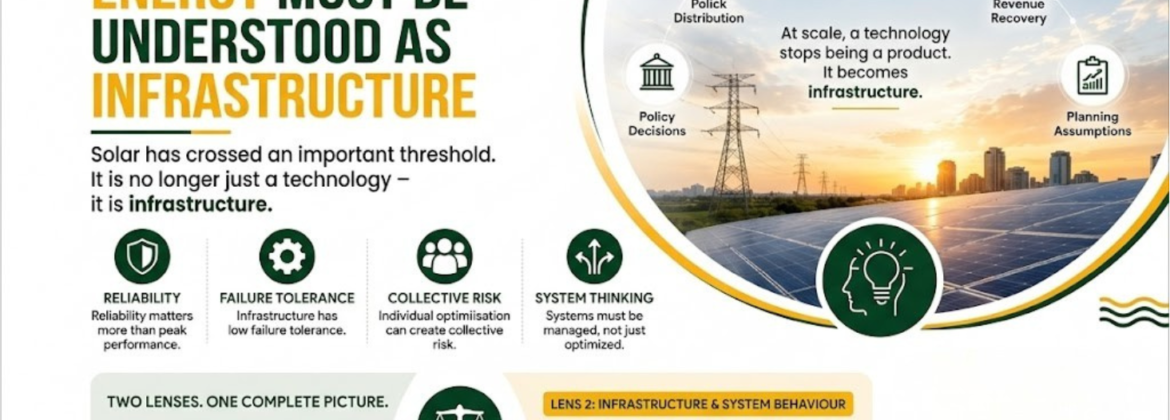
Why Energy Discussions So Often Go Nowhere Discussions around solar and energy policy in Pakistan tend to be intense, repetitive, and rarely productive. The same themes resurface again and again: ⚡ Is solar being encouraged or discouraged? ⚡ Is net metering being “ended” or “fixed”? ⚡ Are policies fair or unfair? ⚡ Who is responsible […]

Averages are Comforting. They compress complexity into a single number, create a sense of predictability, and allow decisions to be made quickly. In solar and energy storage, averages are everywhere: average daily yield, average sun hours, average load, average temperature, and average outage duration. They are also one of the most common sources of misplaced […]


